
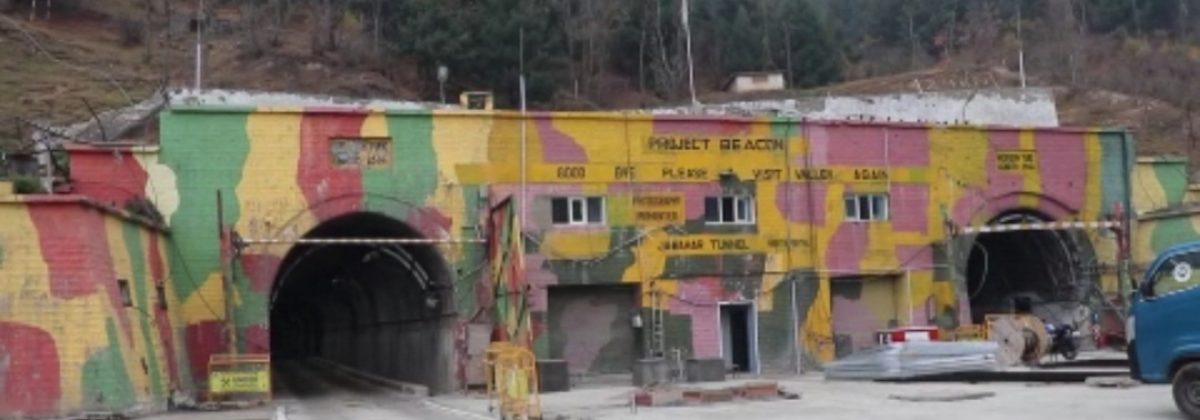
Banihal, November 19: The Border Roads Organisation (BRO) has completed the renovation of the iconic Jawahar Tunnel on the Jammu-Srinagar National Highway at Banihal, equipping it with state-of-the-art technology. The 2.5 km-long tunnel, constructed in 1954 by a German engineering company, now serves as a modernized alternative route, enhancing connectivity to the Kashmir Valley.
Amiya Shrivastava, Commander of the 760 Border Roads Task Force (BRTF), provided an update on the project. He stated that the renovation, which began in July last year, was undertaken to address long-standing seepage issues, improve safety and surveillance, and upgrade mobility infrastructure within the tunnel.
“The upgradation focused on improving the riding surface by laying concrete on both tubes of the tunnel. Additionally, advanced jet fans for ventilation, cutting-edge lighting systems, and high-tech surveillance gadgets have been installed to ensure its functionality and longevity,” said Commander Shrivastava.
The renovation, completed within 18 months at a cost of ₹62.50 crore, marks a significant improvement in infrastructure. The revamped tunnel now boasts modern monitoring systems to oversee its performance and ensure operational safety.
New Tunnel Restrictions
The Commander noted that certain restrictions apply to the new tunnel. Vehicles carrying fuel, LPG cylinders, and other explosive materials, along with local traffic and defence convoys, will continue to use the old tunnel.
Historic Significance
Perched at an altitude of 2,200 meters on the Pir Panjal range, the Jawahar Tunnel was the only route connecting Kashmir with the rest of India until 2022. Its renovation ensures a safer and more efficient alternative for travelers, strengthening the lifeline between Jammu and Srinagar.
The BRO’s achievement underscores its commitment to enhancing infrastructure in challenging terrains while preserving the historic legacy of the tunnel.